Report shows European governments are waking up to the importance of breakfast in public health – but more progress must still be made in many European countries
Brussels, 6 December 2017
A first-of-a-kind report, released today, shows that half of EU governments surveyed fail to fully understand and promote the importance of breakfast in public health. Looking at 16 countries, the Breakfast is Best (BIB) coalition teamed up with nutrition and behaviour expert Professor Louise Dye of the University of Leeds (UK) and found that 8 governments fell short on at least one of the report's four criteria measuring how well governments promote the consumption of breakfast as a public health issue. This clearly shows Europe’s governments need to do more to ensure Europeans understand how crucial breakfast is.
“Breakfast is the most important meal of the day” is more than just a slogan. For the first time, a report has detailed how EU Member States communicate around, and promote consumption of, breakfast. The Importance of Breakfast in Europe: A Review of National Policies and Health Campaigns – produced by the Breakfast is Best campaign and co-authored by nutrition and behaviour expert Professor Louise Dye of the University of Leeds – takes a look into the way governments communicate around, and promote consumption of, breakfast.
The report examined 16 countries’ policies on healthy lifestyles and diet and found that while health and lifestyle implications of regular breakfast consumption are largely understood, many European governments still do not devote sufficient effort to encouraging people to have breakfast. It is also clear that there are currently no EU level campaigns dedicated to promoting breakfast consumption.
The assessment is based on on four criteria – referencing the importance of breakfast in official documentation, monitoring and measuring breakfast consumption data, providing clear and user-friendly information and organising or supporting ongoing campaigns. The report found that while half of all countries met all four measures (Belgium, Denmark, Italy, the Netherlands, Portugal, Slovenia, Spain and the UK), Germany and the Republic of Ireland only met three, Austria, France and Greece met two, the Czech Republic only one, while Poland and Romania met none of the four.
Commenting on the findings, Professor Louise Dye explained: “It is encouraging that the importance of breakfast is being acknowledged by policymakers, as evidenced by the majority of health (or other relevant) ministries referencing the importance of breakfast in their materials. The EU and Member States should increase their focus on breakfast consumption as part of healthy diet and living strategies, and better inform the general public on the well supported evidence of the benefits of positive breakfast behaviour throughout one’s lifetime.”
Dr. Vincenzo Costigliola of the European Medical Association added: “The benefits of breakfast are clear and scientifically proven, and it is essential that decision-makers wake up to the importance of breakfast and play a full part in encouraging Europeans to eat breakfast more regularly.”
The Breakfast is Best coalition is calling for public health authorities to include breakfast in health guidance to recommend breakfast consumption. To that end, more funding should be dedicated to monitoring breakfast consumption statistics, trends and initiatives on an EU and Member State level, as well as the link between breakfast promotion and public health. The Importance of Breakfast in Europe: A Review of National Policies and Health Campaigns and our full call to action can be found on www.breakfastisbest.eu.
ENDS
For further information, please email info@breakfastisbest.eu or visit www.breakfastisbest.eu.
On the ‘Breakfast is Best’ coalition:
The ‘Breakfast is Best’ coalition, established in 2008, gathers the European associations representing medical doctors (EMA – European Medical Association), dietitians (EFAD - European Federation of the Associations of Dietitians), pediatricians (CEDE - le Club Européen des Diététiciens de l’Enfance) and breakfast cereal producers (CEEREAL – European Breakfast Cereal Association).
The purpose of the coalition is to significantly increase awareness among European and national level decision makers about the importance of breakfast and ensure that the message “breakfast is the most important meal of the day” is as well understood and acted upon as the advice to “eat five portions of fruit and vegetables per day”.
The ‘Breakfast is Best’ coalition calls on European leaders to put breakfast at the heart of public health promotion campaigns and encourage Europeans to “Make Time for Breakfast” as a significant but achievable step towards achieving healthier lifestyles. In order to achieve this, BIB has set some clear objectives:
- Ensuring that, by 2020, all EU countries include the importance of eating breakfast in their nutrition policies and monitor breakfast consumption as a key health indicator.
- “Eat breakfast everyday” is added to standard nutrition advice and the importance of breakfast is included in school curricula and employee health initiatives.
- The WHO/Europe “Health 2020 strategy” and EU actions on health inequalities reflect the importance of eating breakfast for long-term health outcomes.
Breakfast is Best launches 70-page report – The Importance of Breakfast in Europe: A Review of National Policies and Health Campaigns
Today on the 6th of December 2017 Breakfast is Best launches its comprehensive report, The Importance of Breakfast in Europe: A Review of National Policies and Health Campaigns on the occasion of a EURACTIV Stakeholder Workshop entitled “Promotion of healthy diets in the EU: What role for breakfast?”.
The Importance of Breakfast in Europe: A Review of National Policies and Health Campaigns takes a unique look into the way governments communicate around and promote consumption of breakfast in 16 European countries and is the result of months of work conducted by the Breakfast is Best campaign – which includes the European Breakfast Cereal Association (CEEREAL), the European Medical Association (EMA), the European Federation of the Associations of Dietitians (EFAD) and the European Club of Paediatric Dietitians/le Club Européen des Diététiciens de l’Enfance (CEDE) – and Professor Louise Dye, an expert on nutrition and behaviour at the University of Leeds.
The review examines what health ministries and agencies say about breakfast, whether they actively promote breakfast consumption in health campaigns aimed particularly at children and adolescents, and the clarity and accessibility of the material used to do so. In addressing the information gaps in Europe on the importance of breakfast, the report celebrates the countries that are actively promoting the consumption of breakfast while at the same time drawing attention to the gaps that exist from country to country. The report compares these findings to breakfast consumption figures, drawing on data from the latest “Health Behaviour in School-aged Children” (HBSC) study published in 2016 by the World Health Organization (WHO)1. Breakfast is Best ultimately aims to work towards achieving the inclusion of breakfast consumption as a key health recommendation across the European Union, and this report is a first step towards this.
Access the full report here.
|
Access the stand-alone Executive Summary here.
|
The EURACTIV Stakeholder Workshop entitled “Promotion of healthy diets in the EU: What role for breakfast?” takes place on 6 December 2017 from 8:30-10:30 at the EURACTIV Network Office, Boulevard Charlemagne 1, 1040 Brussels. Coinciding with the publication of The Importance of Breakfast in Europe report, the workshop will discuss how to tackle the nutrition agenda at both EU and national level and explore the report’s findings. On the occasion of this event, EURACTIV has produced an infographic incorporating some findings from our report.
Discussion topics:
- How can we engage decision-makers to promote breakfast as part of a balanced lifestyle?
- How is healthy nutrition being promoted across the EU Member States?
- Have current national campaigns and policies achieved their goals?
- What are the best practices on healthy nutrition promotion among EU Member States?
- What kind of communication tools can be leveraged to improve nutrition knowledge and practices?
Discussion contributors:
Ciarán Nicholl, Head of the Health in Society Unit at the Health, Consumers and Reference Materials Directorate, Joint Research Centre, European Commission
Emma Calvert, Food Policy Officer, The European Consumer Organisation (BEUC)
Louise Dye, Professor and N8 AgriFood Chair in Nutrition and Behaviour, University of Leeds
Milka Sokolović, Head of Food & Health Science, European Food Information Council (EUFIC)
For more information on the Stakeholder Workshop please visit http://events.euractiv.com/event/info/promotion-of-healthy-diets-in-the-eu-what-role-for-breakfast
(1) Inchley J et al., eds. Growing up unequal: gender and socioeconomic differences in young people’s health and well-being. Health Behaviour in School-aged Children (HBSC) study: international report from the 2013/2014 survey. Copenhagen, WHO Regional Office for Europe, 2016 (Health Policy for Children and Adolescents, No. 7). Available from: http://www.euro.who.int/__data/assets/pdf_file/0003/303438/HSBC-No.7-Growing-up-unequal-Full-Report.pdf.
Calling for Action from Europe’s leaders to promote the health benefits of breakfast on the occasion of World Diabetes Day
13 November 2015, Brussels – On the occasion of World Diabetes Day on 14 November, the Breakfast is Best (BIB) coalition – representatives of Europe’s doctors, dietitians and the European breakfast cereal industry (CEEREAL) – relaunches its ‘Call to Action’ urging Europe’s decision-makers to take the necessary steps to promote breakfast as part of a healthy lifestyle.
With about 60 million people living with diabetes in the European Region alone, or about 10.3% of men and 9.6% of women aged 25 years and over, the prevalence of diabetes is increasing among all ages, mostly due to increases in overweight and obesity, unhealthy diet and physical inactivity(1). With the World Health Organization projecting that diabetes will be the 7th leading cause of death in 2030(2), there is an urgent need for European policymakers to encourage healthy eating at Member State level. One of the ways to prevent this growing epidemic is by adopting a healthier lifestyle; and key to this is a balanced and healthy diet, including regular breakfast consumption.
Breakfast consumption can not only help manage and reduce the risk of diabetes, but can also play a fundamental role in lowering the chances of other non-communicable diseases such as obesity, blood pressure and low nutritional intake. A growing body of scientific research shows that breakfast-skipping is linked to sedentary lifestyles, a slower metabolism and poor dietary choices.(3) It is therefore essential that policymakers ensure that a positive attitude towards the significance of breakfast is developed throughout Europe.
To quote Dr. Duane Mellor, an eminent academic in the field of dietetics(4), “What is emerging is that including breakfast as part of your daily routine can help maintain more stable blood sugar (glucose) levels after lunch and dinner later in the day. This effect has been seen in both people with and without type 2 diabetes. So, breakfast can play a key role in maintaining stable blood sugars, throughout the day.”(5)(6)
BIB’s European Call for Action encourages national health authorities and policymakers from across Europe to adopt the following approach to promote the health benefits of breakfast on a local, national and European level:
- Ensuring that, by 2020, all EU countries include the importance of eating breakfast in their nutrition policies, and monitor breakfast consumption as a key health indicator;
- ‘Eat breakfast everyday’ is added to standard nutrition advice and the importance of breakfast is included in school curricula and employee health initiatives;
- The World Health Organization Europe ‘Health 2020 strategy’ and European Union actions on health inequalities reflect the importance of eating breakfast for long-term health outcomes.
Together, members of the Breakfast is Best campaign and a wide range of supporters call on Europe’s leaders to put breakfast at the heart of public health promotion campaigns and encourage Europeans to ‘Make Time for Breakfast’ as a significant but achievable step towards achieving healthier lifestyles.
You can show your support and sign the ‘Make Time for Breakfast Pledge’ here: www.breakfastisbest.eu/pledge.
Contact
For further information on Breakfast is Best please visit our website www.breakfastisbest.eu or contact Sylvie Aitken on +32 2 510 6022.
(1) WHO Europe, Diabetes Data and statistics, http://www.euro.who.int/en/health-topics/noncommunicable-diseases/diabetes/data-and-statistics
(2) WHO, Diabetes Factsheet, http://www.who.int/mediacentre/factsheets/fs312/en/
(3) Some examples include: Adolphus K., Lawton C. and Dye L., The effects of breakfast on behavior and academic performance in children and adolescents, Human Appetite Research Unit, Institute of Psychological Sciences, University of Leeds; Williams PG., The Benefits of Breakfast Cereal Consumption: A Systematic Review of the Evidence Base. ADV NUTR 2014:4:5:636S-673S; Currie C et al., eds. Social determinants of health and well-being among young people. Health Behaviour in School-aged Children (HBSC) study: international report from the 2009/2010 survey. Copenhagen, WHO Regional Office for Europe, 2012 (Health Policy for Children and Adolescents, No. 6).
(4) Dr. Duane Mellor is assistant Professor in Dietetics at the University of Nottingham, UK, Spokesperson for the British Dietetic Association (BDA) and Lead of the European Specialist Dietetic Network for Diabetes of the European Federation of the Associations of Dieticians (EFAD).
(5) http://ajcn.nutrition.org/content/early/2014/06/04/ajcn.114.083402
(6) http://care.diabetesjournals.org/content/38/10/1820.abstract
Breakfast is Best stands behind Food Revolution Day
15 May 2015, Brussels – The Breakfast Is Best initiative fully supports the Food Revolution Day movement launched by Jamie Oliver, world-renowned chef and campaigner, to make practical food education compulsory for children in schools across the world.
Currently approximately 42 million children under the age of five around the globe are either overweight or obese(1), with forecasts predicting that 41% of the entire world’s population will be overweight or obese by 2030(2). With diet related diseases including heart failure and stroke amongst the world’s biggest killers, the next generation is expected to live even shorter lives than their parents if nothing is done.
The global Food Revolution Day petition encourages leaders and governments of all G20 countries to make food education a compulsory part of every school curriculum, thereby educating children about food and cooking, and empowering people to fight obesity.
Breakfast is Best believes that a balanced and healthy diet, including regular breakfast consumption, is key to combating chronic diseases and adopting healthier lifestyles and is a strong advocate for initiatives such as Food Revolution Day. It calls on policymakers to include the importance of breakfast in dietary recommendations and to monitor breakfast consumption as a key health indicator. With this in mind we encourage you to sign our ‘Make Time for Breakfast Pledge’, which can be viewed in full online at www.breakfastisbest.eu/pledge.
The #FoodRevolutionDay petition can be viewed and signed here. Follow @BreakfastIsBest for updates and information on healthy lifestyles and healthy eating.
Contact:
To learn more about Jamie Oliver’s Food Revolution Day campaign, please visit www.foodrevolutionday.com or #FoodRevolutionDay.
For further information on the Breakfast is Best initiative, please visit our website www.breakfastisbest.eu, contact us through Twitter @BreakfastIsBest or contact Sylvie Aitken on +32 2 510 6022.
(1) WHO | Obesity and overweight. 2015. WHO | Fact sheet N°311, Updated January 2015. [ONLINE] Available at: http://www.who.int/mediacentre/factsheets/fs311/en/. [Accessed 12 May 2015].
(2) McKinsey: Obesity costs global society 2.0 trillion a year | Consultancy.uk. 2015. McKinsey: Obesity costs global society 2.0 trillion a year, 24 November 2014 | Consultancy.uk. [ONLINE] Available at:http://www.consultancy.uk/news/1078/mckinsey-obesity-costs-global-society-20-trillion-a-year. [Accessed 12 May 2015].
4th European Breakfast Day announces upcoming study on the importance of breakfast
24 April 2015, Brussels – A balanced and healthy diet, including regular breakfast consumption, is key to combating chronic diseases and adopting healthier lifestyles.
1 Inchley J et al., eds. Growing up unequal: gender and socioeconomic differences in young people’s health and well-being. Health Behaviour in School-aged Children (HBSC) study: international report from the 2013/2014 survey. Copenhagen, WHO Regional Office for Europe, 2016 (Health Policy for Children and Adolescents, No. 7). Available from:
http://www.euro.who.int/__data/assets/pdf_file/0003/303438/HSBC-No.7-Growing-up-unequal-Full-Report.pdf.
Marking the fourth European Breakfast Day, the ‘Breakfast is Best’ coalition announces the imminent launch of a Breakfast is Best report provisionally entitled ‘The Benefits of Breakfast: European Consumption Guidelines’.
The report is the product of a collaboration between Professor Louise Dye, Professor of Nutrition and Behaviour from the University of Leeds and Breakfast is Best, a coalition made up of representatives of Europe’s teachers, doctors, dietitians, paediatric dietitians, and breakfast cereal industry.
Building on the WHO HBSC report from 2009/2010(1) which looks at breakfast consumption patterns across the EU amongst children and adolescents, this report examines health information provided in 17 European countries with regard to breakfast consumption, showcasing the countries that are actively promoting and monitoring the consumption of breakfast. The report will be officially launched in the second half of 2015, in a high level roundtable in Brussels.
Judith Liddell, Secretary General of EFAD, the European Federation of the Association of Dietitians explained: ‘With this report, we will be able to see which European countries are actively promoting breakfast consumption and will look to share best practices within the whole of Europe.’
The prevalence of chronic diseases is increasing, resulting in huge economic and social implications. The collective impact of the major chronic diseases – diabetes, cardiovascular diseases, cancer and chronic respiratory diseases - is estimated to account for 86% of deaths across Europe and 77% of the disease burden.(2)
The Breakfast is Best campaign is calling on policymakers to include the importance of breakfast in dietary recommendations and to monitor breakfast consumption as a key health indicator. This report builds on the launch of our ‘Make Time for Breakfast Pledge’ in 2012, which calls on policymakers to take the necessary steps to promote breakfast as part of a healthy lifestyle.
The pledge can be viewed in full online at www.breakfastisbest.eu/pledge
Contact
For further information please visit our website www.breakfastisbest.eu or contact Sylvie Aitken on +32 2 510 6022.
(1) http://www.euro.who.int/__data/assets/pdf_file/0003/163857/Social-determinants-of-health-and-well-being-among-young-people.pdf
(2) http://www.euro.who.int/en/health-topics/noncommunicable-diseases
Breakfast is Best holds ‘Go Blue for Breakfast’ Twitter Hour chat in support of World Diabetes Day

17 November 2014, Brussels – On the occasion of this year’s World Diabetes Day (14 November 2014), and its theme of ‘Going Blue for Breakfast’, the Breakfast is Best Campaign held a highly successful Twitter Hour chat with Duane Mellor and Azmina Govindji. The chat was joined by over 60 key representatives of the health and nutrition field and followed by many more.
Breakfast is Best, a multi-stakeholder science-based campaign involving Europe’s teachers, dietitians, doctors and the breakfast cereal industry, brought together a high number of health experts to discuss the importance of breakfast in healthy lifestyles. The chat, co-hosted by Dr. Duane Mellor, an eminent academic in the field of dietetics, and Azmina Govindji, an award-winning dietitian, looked to answer a number of questions such as what the impact of breakfast skipping is and whether Europe can afford to ignore its benefits.
Dr. Mellor said that the “chat raised awareness around breakfast and its role in promoting healthy lifestyles” and he responded to a number of questions on how it can “play a role in the management and prevention of diabetes and other non-communicable diseases.” Azmina Govindji added that the “success of the chat shows the urgent need to inform EU citizens about the health benefits of a balanced breakfast. On that basis, we urge policy makers to come together to ensure EU countries include the importance of eating a healthy breakfast in their nutrition policies.”
Throughout the one hour Twitter chat, Dr. Mellor and Ms. Govindji interacted with over 60 expert dietitians and nutritionists, a number of academics, as well as health organisations including the European Association for the Study of Obesity, the Registered Dietitians UK Association and the Diabetes Research and Wellness Foundation.
We are also very happy that the Twitter chat has brought attention to the Breakfast is Best pledge – more than 50 people have signed our ‘Make Time for Breakfast’ pledge in the week leading up to and after the Twitter chat. We continue to urge everyone committed to raising awareness of the importance of breakfast in preventing and managing non-communicable diseases such as diabetes or obesity to show their support by signing our ‘Make Time for Breakfast Pledge’.
The Twitter chat was a fantastic tribute to World Diabetes Day and we would like to thank everyone who participated in the chat and contributed to the discussions.
Contact
For further information please visit our website www.breakfastisbest.eu or contact Ana Burton Garcia on +32 2 515 00 15.
Additional information
Dr. Duane Mellor is assistant Professor in Dietetics at the University of Nottingham, UK, Spokesperson for the British Dietetic Association (BDA) and Lead of the European Specialist Dietetic Network for Diabetes of the European Federation of the Associations of Dieticians (EFAD).
Azmina Govindji is an award-winning dietitian and media nutritionist, best-selling author and media spokesperson for the British Dietetic Association.
A copy of the Twitter Hour chat can be found here: https://storify.com/BreakfastIsBest.
Calling for Action - from Europe’s Leaders
On the occasion of World Diabetes Day, November 14 2014, the Breakfast is Best coalition – representatives of Europe’s teachers, doctors, dietitians, paediatric dietitians and the European breakfast cereal industry – relaunched its ‘Call to Action’ urging Europe’s decision-makers to take the necessary steps to promote breakfast as part of a healthy lifestyle. You can find the full text here.
For more information, please e-mail info@breakfastisbest.eu or call Sylvie Aitken at the BIB Secretariat on +32 2 510 60 22
Breakfast is Best “goes blue” in support of World Diabetes Day focus on breakfast - Press Release
13 November 2014, Brussels – Core to the Breakfast is Best objective, we welcome and fully support this year’s World Diabetes Day which highlights the importance of breakfasts as part of a healthy lifestyle. World Diabetes Day highlights the need to promote breakfast consumption as a key tool in addressing the health epidemic, which is also a fundamental goal of the Breakfast is Best coalition. On the occasion of World Diabetes Day, we will hold a Twitter Hour chat on Friday 14th November with Dr. Duane Mellor, Assistant Professor in Dietetics at the University of Nottingham, UK, Spokesperson for the British Dietetic Association (BDA) and Lead of the European Specialist Dietetic Network for Diabetes of the European Federation of the Associations of Dieticians (EFAD), and Azmina Govindji, award-winning Dietitian and Media Nutritionist, best-selling Author, Media Spokesperson for the British Dietetic Association and formerly Chief Dietitian to Diabetes UK, to address the importance of breakfast as part of a healthy lifestyle.
On World Diabetes Day, the Breakfast is Best coalition – representatives of Europe’s teachers, doctors, dietitians, pediatric dietitians and the breakfast cereal industry – join the International Diabetes Federation in calling on the wider community to ‘Go Blue for Breakfast’ to highlight the importance of healthy eating to help prevent type 2 diabetes. Judith Liddell, Secretary General of the European Federation of the Associations of Dietitians (EFAD), adds “we are very pleased that World Diabetes Day is focusing on the need for breakfast; we continue to urge all EU countries to stress the importance of this meal in their nutrition policies by 2020.”
With over 53 million people suffering from diabetes in Europe alone(1) – a number which is set to rise to 66.5 million by 2030 and account for 8.1% of the adult population(2) – breakfast consumption can not only help manage and reduce the risk of diabetes, but can also play a fundamental role in preventing other non-communicable diseases such as obesity, blood pressure and low nutritional intake(3). A growing body of scientific research shows that breakfast-skipping is linked to sedentary lifestyles, a slower metabolism and poor dietary choices.
According to Dr. Duane Mellor, “World Diabetes Day is a good opportunity to promote healthy lifestyles and including the value of eating breakfast in addressing this health epidemic.”
As part of World Diabetes Day we will hold a Twitter Hour chat on Friday, November 14th from 11:00-12:00 CET with Duane Mellor and Azmina Govindji who will answer questions around the importance of breakfast in promoting healthy lifestyles and its role in the management and prevention of diabetes and other non-communicable diseases. To participate or follow the debate, simply tune in live by following @BreakfastIsBest and #BIBGoesBlue. We also urge everyone committed to raising awareness of risk factors associated with diabetes – such as being overweight or obesity – to show their support by signing our ‘Make Time for Breakfast Pledge’.
Contact
For further information please visit our website www.breakfastisbest.eu or contact Ana Burton Garcia on +32 2 515 00 15.
(1) IDF Diabetes Atlas, 6th edition, 2014
(2) WHO, Diabetes Factsheet, http://www.who.int/mediacentre/en
(3) IDF Diabetes Atlas, 6th edition, 2014
BIB calls on Commissioner Borg to
make breakfast a priority
To: Commissioner Tonio Borg
European Commission
Rue de la Loi 200
B - 1040 Brussels
Brussels, 21 October 2014
Dear Commissioner Borg,
On 15 October 2014 you delivered a speech to an audience attending the Parliament Magazine event on “Addressing the burden of chronic diseases in the EU: The need to tackle obesity”, where you spoke about the growing obesity epidemic that is affecting European youth and adults at an alarming rate.
We, the undersigned members of the Breakfast is Best campaign – a multi-stakeholder science-based campaign involving Europe’s teachers, dietitians, doctors and CEEREAL (European breakfast cereal and oat milling industry) – would like to commend you for your message, in which you directly addressed the importance of breakfast consumption as part of a healthy diet and an important element in the fight against obesity.
As you pointed out during your speech, over half of European adults are overweight or obese. Similarly, WHO Europe in a 2014 report noted that more than 20% of children and adolescents across Europe are overweight, with a third of them being obese.(1) This is an alarming statistic and one that needs to be addressed urgently. The enormous economic and social implications of the obesity epidemic are vast, and coming up with a European solution to the problem is key to improve the lives of European citizens, national health systems, and the European economy as a whole: successfully tackling obesity should be a high priority for legislators across Europe.
The role of breakfast in addressing the obesity epidemic needs to be stressed. A regular breakfast is part of a healthy diet, which in turn has traditionally been considered an important factor in a healthy lifestyle. A growing body of scientific research has shown that breakfast contributes to the quality and quantity of a person’s daily dietary intake. Breakfast-skipping has been linked to sedentary lifestyles, a slower metabolism, and poor dietary choices, including more frequent unhealthy snacking throughout the day. It has also been linked to learning difficulties, poor school performance and behavioural issues.(2)
The objective of the Breakfast is Best campaign is to ensure that by 2020 all EU countries stress the importance of eating breakfast in their nutrition policies, and monitor breakfast consumption as a key health indicator. As part of this campaign, we have created the “Make Time for Breakfast Pledge”, which calls for action by policymakers across Europe to improve rates of regular breakfast eating.
In that regard, Mr. Borg, we the undersigned members of the Breakfast is Best campaign invite you to sign our pledge and show your continued support for making breakfast an important component of European diets. In signing the pledge, we hope you will impart your legacy on your successor in the European Commission.
Currently we have over 500 signatories including a number of your DG SANCO colleagues as well as Parliamentarians and the European Health Forum Gastein amongst other international health associations and policy makers.
Please find attached the full text of the pledge. For further information and to sign the Breakfast is Best pledge, please visit www.breakfastisbest.eu/pledge.
Yours sincerely,

Sylvie Aitken
Breakfast is Best Secretariat
(1) WHO Europe, Prevention and control of noncommunicable diseases in the European Region: a progress report, 2014
(2) Some examples include: Adolphus K., Lawton C. and Dye L., The effects of breakfast on behavior and academic performance in children and adolescents, Human Appetite Research Unit, Institute of Psychological Sciences, University of Leeds; Williams PG., The Benefits of Breakfast Cereal Consumption: A Systematic Review of the Evidence Base. ADV NUTR 2014:4:5:636S-673S; WHO Europe, Health behaviour in school-aged children international report from the 2009/2010 survey, Social determinants of health and well-being among young people, 2009/2010
In collaboration with:

3rd European Breakfast Day launches review of the importance of breakfast in European consumption guidelines
Brussels 24th April 2014 – Today, to mark the third European Breakfast Day, the ‘Breakfast is Best’ coalition – representatives of Europe’s teachers, doctors, dietitians, paediatric dietitians, and breakfast cereal industry1 – announces the launch of an upcoming report provisionally entitled ‘The Benefits of Breakfast: European Consumption Guidelines’.
Following on from previous successful European Breakfast Days, this year the Breakfast is Best coalition, founded in 2008, will be conducting a study examining the health information provided in 17 European countries with regard to breakfast consumption. The objective of this report is to highlight the countries that are actively promoting and monitoring the consumption of breakfast, and share best practice with those where information gaps exist.
The implications of Europe’s poor health are profound. The prevalence of chronic diseases is increasing with huge economic and social implications. The collective impact of the major chronic diseases – diabetes, cardiovascular diseases, cancer and chronic respiratory diseases - is estimated to account for 86% of deaths across Europe and 77% of the disease burden3. A balanced diet is essential in following a healthy lifestyle, and regular breakfast consumption is a key part of this. The impact of breakfast and its importance should therefore be actively promoted and included in national nutritional guidelines.
The Breakfast is Best campaign is calling on policymakers to include the importance of breakfast in dietary recommendations and to monitor breakfast consumption as a key health indicator. To find out more about our campaign and existing initiatives to encourage regular breakfast eating across Europe, visit www.breakfastisbest.eu. This report and the Call to Action build on the launch of the Make Time for Breakfast Pledge in 2012, which calls on policymakers to take the necessary steps to promote breakfast as part of a healthy lifestyle. The pledge can be viewed in full online at www.breakfastisbest.eu/pledge
European Chronic Disease Summit: Healthy Living Starts at the Breakfast Table
Brussels 3rd April 2014 - Today kicks off the first European Chronic Disease Summit focusing on the increasing prevalence of the issue across Europe, and the social and economic burden it brings.
The number of people affected by chronic diseases - including diabetes, cardiovascular diseases and many types of cancers - has significantly increased in recent years. 60 million people across Europe suffer from diabetes(1), and half of global cardiovascular disease deaths occur in the region(2). With 50% of the adult population overweight(3), this trend is set to continue.
One of the ways to combat chronic diseases is through adopting a healthier lifestyle. Key to this is a balanced and healthy diet, including regular breakfast consumption, which can help reduce risk factors such as blood pressure, obesity and low nutritional intake. Practicing dietician and Breakfast is Best coalition member Judith Liddell says “Making time for breakfast is a simple, but very significant step towards good health. A nutritious breakfast means a good start to the day – it’s an easy way to improve your daily diet and to make sure that you get the right nutrition at the start of every day”...
The Breakfast is Best campaign is calling on European policymakers to do more to encourage its citizens to have breakfast every day as part of a healthy lifestyle. To show your support on the occasion of the European Chronic Disease Summit, sign our pledge to ensure that breakfast remains on the policy agenda as a key health issue.
1. WHO. Noncommunicable-diseases. Prevention and control of noncommunicable diseases in the European Region: a progress report (diabetes)
2. WHO. Noncommunicable-diseases. Prevention and control of noncommunicable diseases in the European Region: a progress report (cardiovascular disease)
3. WHO. Noncommunicable-diseases. Prevention and control of noncommunicable diseases in the European Region: a progress report (obesity)
Tackling Health Inequalities
the Breakfast Way
 Europe is often seen as the world’s healthiest continent, with longer life expectancies and fewer chronic diseases than any other World Health Organisation region. Yet this global picture masks enormous discrepancies both between EU member states and within European countries.
For a wide range of reasons – cultural, socioeconomic and geographical – Europe is a mixed picture when it comes to healthy behaviours. The European Commission and other EU institutions have made great progress in working to improve the health and well-being of EU citizens and reduce health inequalities throughout the Community; however, more must still be done.
Problems such as poor diet, impacting on school performance, directly affect the most disadvantaged communities. Breakfast is one small way of helping to close the gap: but it can be a small measure with a big impact in people’s everyday lives.
In the UK, a range of private sector companies, non-governmental organisations and individuals came together and tackled this issue head on. With support from financial institutions, the hospitality and leisure sector and the food sector, Magic Breakfast, a British charity, has succeeded in touching the lives of thousands of children in hundreds of schools.
Despite being one of the richest economies in the world, there are almost 4 million children in the UK growing up in poverty and an estimated 700,000 children arriving at school hungry, with a third of children regularly missing breakfast before school.
In the words of Carmel McConnell from Magic Breakfast, “A hungry child cannot concentrate. We think every child needs a healthy breakfast, ideally at home with their parents. But some parents cannot provide – so let’s not allow any child to miss out on their future success for want of a breakfast. That's why Magic Breakfast reaches into the heart of communities to close the attainment and nutrition gap and give every child the best start to every day.”
MagicBreakfast targets schools where over 50% of the children are living in poverty and eligible for Free School Meals (the UK average is 17%). The charity has identified 200 primary schools across the UK, where it now feeds free breakfasts (bagels, porridge, orange juice and cereals) to 6,000 children.
Carmel McConnell explains: “We make sure we reach the children most in need, the children who are arriving at school without having breakfast or in some cases any food since lunchtime the day before. We don’t believe in quick fixes for a larger social problem. But breakfast can go a long way to solving the problem of child hunger at the start of the school day.”
Children agree. Patrice from Hackney in London says that “I used to be very sleepy, but since I’ve been coming to breakfast club I’ve been on the ball.”
Teachers support the initiative too. Louise Nichols, Headteacher at Kingsmead Primary School, explains that “Magic Breakfast has meant a safe, happy start to the day for all Kingsmead children that need it. With Magic Breakfast’s help we have been able to make our breakfast club free and therefore accessible to all.”

15 per cent of secondary school pupils go without morning meals, leaving hungry students ‘less attentive’, explains a recent article in the Daily Mail.
Thousands of young people are skipping breakfast leaving them tired and irritable, says a study.
According to a survey of 10,000 parents across the UK around one in six secondary school pupils aged 11 to 16 don't have a morning meal.
The findings, published in a report by the Local Authority Caterers Association (LACA), could account for low concentration levels in the classroom.
According to a study one in six secondary school pupils aged 11 to 16 don't have a morning meal, which could account for low concentration levels.
It concludes: 'Students going without breakfast cannot be at their best for learning during morning lessons and so can be less attentive and a disruption in class.'
Overall results showed that 15 per cent of secondary school pupils are going to school without breakfast - the equivalent of around four pupils in a class of 30.
Meanwhile 3.9 percent of primary school children, aged 4 to 11 are missing out.
The report, commissioned to mark National School Meals Week from November 7-11, also showed that many parents are still wary of free school meals (FSM).
Almost one in six (14.8 per cent) of parents with children eligible for FSM - a measure of poverty - said they did not take up this entitlement.
The main reasons given by parents were that they have a family meal in the evening, their child likes to eat with their friends and that they were worried their youngster would be identified as being on FSM.
Judy Hargadon, chief executive of the School Food Trust, highlighted that it must be the parent's responsibility to ensure that children are well fed before and during the school day.
She said: 'With school food no longer inspected by Ofsted, the influence of parents is very powerful for demanding that every child has a good experience at lunchtime.
'When children eat better, they do better, and how they feel about lunch can make or break their entire day at school.'
Despite concerns, the findings show an improvement from a similar study carried out last year.
A survey of 4,326 children, aged 10-16, in England by the University of Essex showed that almost a third of children regularly went without breakfast before school.
The findings published in the European Journal of Clinical Nutrition revealed that boys often blame lack of time, while many girls skipped meals to lose weight.
Click here to view the original article.
The latest science shows that on the one hand, breakfast eaters are more likely to reach recommended levels of important micronutrients; and on the other, that eating breakfast can help reduce the risk of serious health problems such as obesity, cardiovascular events and diabetes.
The Nutrition Foundation of Italy gathered a group of experts representative of the main Italian medical societies dealing with human nutrition, to prepare a consensus document on the importance of breakfast, based on recent scientific evidence (ACTA, BIOMED 2009; 80: 166-171). The research review concludes that the regular consumption of breakfast (providing 15-20% of the daily calorific intake) is associated with a higher likelihood of reaching the recommended dietary levels of some micronutrients, and with a reduced risk of developing obesity, cardiovascular events, and diabetes, possibly by controlling some of their risk factors.
So even more reason to enjoy breakfast tomorrow morning…. it is the best way to start the day, and a quick and easy step to looking after your health!

May 2010 - EUFIC’s ‘Food Today’ newsletter highlights the latest research on the importance of regular breakfast, and stresses the benefits of developing healthy breakfast habits in childhood. The report shows that compared to breakfast skippers, children who eat breakfast are more likely to meet nutrient recommendations and have higher daily intakes of important vitamins, minerals and fibre.
The article mentions the ‘Breakfast is Best’ campaign, and recognises the work done so far in raising awareness about the importance of breakfast with policymakers in Europe. As our campaign steps-up over the summer, we are delighted to see the ‘Breakfast is Best’ message being reinforced by EUFIC.
EUFIC also highlights early research findings from UK ‘breakfast clubs’, which indicates that eating breakfast does appear to make a difference to kids’ performance in school – another important reason why ‘breakfast is best’!
The EUFIC article and “Breakfast is Best” campaign information can be found at:
http://www.eufic.org/article/en/artid/Regular-breakfast-healthy-habit-in-childhood/

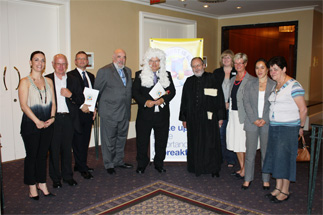
BIB members, jury experts and John Bowis MEP: From left to right: Sylvie Aitken (Aspect), Hugo Ramon (AEDE), Erick Savoye (EMHF), Dr Vincenzo Costigliola (EMA), MEP John Bowis, Dr Ian Banks (EMHF), Brenda O'Brien (OSHA), Karin Hådell (EFAD), Julia Hauk (CEEREAL), Marie-Josée Mozin (CEDE)
Brussels, 24th July 2009 - The Breakfast is Best campaign, whose aim it is to raise the importance of breakfast as a meal and is supported by DG Sanco under the objectives of its white paper 'Together for Health: A Strategic Approach for the EU 2008-2013', successfully hosted a unique EU health policy debate on Wednesday 8th July 2009 in Brussels.
Hosted the evening prior to the 'Plenary of the EU Platform on Diet, Physical Activity and Health', the Breakfast on Trial debate took the form of a real trial which saw breakfast accused of negligence.
The purpose of putting Breakfast on Trial was to gather European and national level opinion formers and influencers to listen, think and discuss whether 'Breakfast', as a key component of public health is being recognised and communicated effectively, or whether it was indeed guilty of its charge of negligence.
The event was led by a Judge (MEP John Bowis), the Inquisitor (Dr Ian Banks (European Men's Health Forum)), and expert witnesses Karin Hådell (European Federation of the Associations of Dietitians), Hugo Ramon (European Association of Teachers) and Dr Vincenzo Costigliola (European Medical Association), with the invited guests playing the crucial role of the Jury. Following a primary vote, which found nearly half the Jury supporting the charge, the panel of expert witnesses [who represent the four different pillars of the 'Breakfast is Best' campaign: health & nutrition, obesity, cognition and physical activity] were cross-examined by the Inquisitor.
Supporting witnesses and the event's jury were drawn from industry, trade associations, the EU institutions, Permanent Representations and the media.
The testimonies provided by the experts fuelled lively discussions on each of the tables, the results of which were noted by the appointed foreman and shared with all the jury members during dessert.
The final verdict was clear - Breakfast was found Not Guilty of Negligence. The trial's findings confirmed that breakfast has strong benefits ranging from general heart health and the reduction of obesity, to an increase in cognitive abilities and safety at the workplace. However, the trial demonstrated that more substantive actions need to be implemented to promote the important benefits of breakfast and to ensure that breakfast is treated as a serious public policy issue.
For the official press release please click here. For a selection of entertaining event photos please click here. For more information, please don't hesitate to contact us.

Brussels, 23rd June 2009 – The ‘Breakfast is Best’ campaign is pleased to announce a unique EU Health Policy debate to be held on Wednesday 8th July 2009 at the Renaissance Hotel in Brussels entitled ‘Breakfast on Trial’.
This one of a kind event, which had been designed to raise awareness amongst European and national level opinion formers of the importance of breakfast as a meal, will take on the format of a real trial.
There will be a presiding Judge (MEP John Bowis), expert witnesses (including; Dr Vincenzo Costigliola (EMA), Karin Hadell (EFAD), and Hugo Ramon (AEDE)), the inquisitor (Dr Ian Banks EMHF) and a jury (the event attendees). Amongst those due to attend are representatives from various NGOs and industry associations, EU public policy makers, members of the EU Parliament and representatives from the EU Member state countries.
The mock trial will address the charge made against breakfast of negligence.
The panel of expert witnesses will each represent the four pillars of the ‘Breakfast is Best Campaign’ – health & nutrition, obesity, cognition and physical activity – where they will present about the importance of breakfast before being cross-examined by the inquisitor. The jury will then debate the issue and discuss the outcome over dinner before making a final vote as to whether breakfast is guilty of the aforementioned charge.
The event will begin at 18.30 with the Jury verdict due to be announced at 21.30.
To register for the event or to find out more information about ‘Breakfast on Trial’ contact us at info@breakfastisbest.eu
April 28th 2009 – Luxembourg. The Breakfast is Best campaign continues to gain significant support and is now aligned with the EU’s Directorate General for Health and Consumer Affairs (DG Sanco) white paper ‘Together for Health: A Strategic Approach for the EU 2008-2013’.
The BIB secretariat met with Mr Philippe Roux (Deputy Head of Unit - DG Sanco) and his team to discuss the recently launched Breakfast is Best campaign. At a time when all members of staff were on red alert with the sudden outbreak of swine flu, Mr Roux generously found the time to discuss ways in which DG Sanco could help support the objectives of the Breakfast is Best campaign to help it raise relevant awareness around the benefits of breakfast.
The alignment of ‘Breakfast is Best’ with the health white paper of DG Sanco – whose role is to help make Europe's citizens healthier, safer and more confident – is an important step forwards for the campaign and its members and proves that breakfast is being treated as a serious public policy issue by EU decision makers. One of the key aims of the Breakfast is Best campaign is to ensure that the benefits of breakfast become an integral element of relevant government communication activities.
DG Sanco and the Breakfast is Best campaigners are currently looking at ways to further maximise synergies to spread the message about the importance of breakfast.
Brussels, 18th September, 2008 – the campaign entitled "Breakfast is Best" has been launched today in the European Parliament. The objective of the campaign, which is sponsored by Avril Doyle MEP, is to raise awareness amongst European and national level opinion formers of the importance of breakfast, and to ensure that breakfast is treated as a serious public policy issue.
The European Union and Member State authorities spend an enormous amount of time and money addressing a range of fundamental health, social and economic challenges such as obesity, cardiovascular disease and educational and workplace performance. Yet public authorities fail to take seriously the contribution that breakfast can make to addressing all these issues by:
- Allowing for greater control over appetite, thereby assisting weight control and helping to prevent obesity
- Increasing cognitive ability and concentration, which helps to increase children’s educational performance and improve health and safety in the workplace
- Boosting energy levels and kick starting your metabolism, which in turn helps to keep people active and fit and curbs hunger
- Helping to decrease the risk of heart disease (the biggest cause of death in Europe) and improve general health.
Dr Vincenzo Costigliola, President, European Medical Association, states that: "The benefits of breakfast are clear and scientifically proven, and it is essential that decision-makers wake-up to the importance of breakfast and play a full part in encouraging Europeans to eat breakfast more regularly."
The fact that 61% of Europeans skip breakfast at least once a week, and that in many European countries the trend is towards eating breakfast less frequently, means that it is very important that breakfast is treated as a serious public policy issue. Karin Hådell, Honorary President of the European Federation of the Association of Dieticians, adds that: "It is essential that we halt the worrying decline in the number of Europeans regularly eating breakfast and this cannot be achieved without Europe’s public authorities playing a more active role in this area."
According to Jean-Claude Gonon, Secretary-General of the European Association of Teachers: "The objective of the Breakfast is Best campaign is clear: we want public policy makers to recognise the benefits of breakfast, and to make breakfast a key element of relevant government communication activities. The message ‘breakfast is the most important meal of the day’ should be as well understood and acted upon as the advice to ‘eat five portions of fruit and vegetables per day.’"
More specifically, the campaign calls for policy makers to encourage more regular breakfast consumption by: including "eat breakfast every day" in public health campaigns; adding "eat breakfast every day" to nutrition advice tips; including the importance of a morning meal in school curricula; and encouraging employers to promote it to their employees.
The campaign is being backed by a coalition of organizations, all of whom have an interest in ensuring that European citizens enjoy the full benefits of breakfast.
For more information, please don’t hesitate to contact us.

The Olympics may be finished, but we all still remember being riveted to our television screens by US swimming sensation Michael Phelps’s quest for an unprecedented 8 gold medals. Phelps ended up hitting his target of 8 golds; a previously unheard of sporting achievement.
The secret to Phelps’s success was understandably the subject of considerable media interest and the coverage recognised the contribution that nutrition made to his training regime. The Olympian consumes a staggering 10,000 calories per day as part of his training regimen, five times the recommended amount for an average adult male.
Phelps’s diet is high in carbohydrates and fats - not the classic diet for an Olympic athlete, one would think – and breakfast plays a key role in meeting his nutrition needs. On a typical day, he consumes three fried egg sandwiches with cheese, tomatoes, lettuce, fried onions and mayonnaise; three chocolate chip pancakes; a five-egg omelette; three sugar-coated slices of French toast and a bowl of grits, all washed down with two cups of coffee.
However, Phelps is not the only sportsman to believe that breakfast is the most important meal of the day. Many other big names also kick off their day with a hearty breakfast.
Olympic cycling gold medallist, Kristin Armstrong, also starts her day with breakfast. For Kristin, and many other athletes, sometimes one morning meal is not enough; she often has a small breakfast before working out, followed by another immediately after.
The most common breakfast consumed by athletes is oatmeal. Many say that the slowly-digesting carbohydrates help to keep them active throughout the day. Sometimes, a little peanut butter or non-fat yoghurt can be added to boost the protein content.
New Zealand’s rugby team, the All Blacks, are consistently one of the world’s top teams, and nutrition plays a big part in what makes the team play like champions. The All Blacks’ diet gives them the energy they need, whilst avoiding too many foods high in saturated fats. A typical breakfast would feature fruit, cereal, yoghurt, fruit juice and a poached egg or two on toast - with grilled tomatoes on the side.
However, before you begin bulking up for Olympic glory, a word of warning. Experts say Phelps' diet is not recommended for the average person. Jeff Kotterman, director of the U.S. National Association of Sports Nutrition, explained to the BBC's Michael Hirst that Phelps’s diet is appropriate for him because, "it's a combination of peak performance coupled with the fact that he has an enormous metabolism - he burns more calories sitting at a desk than a lot of people burn walking."
So, although we shouldn’t all eat 10,000 calories a day, even the amateur sportsman or woman can benefit from breakfast - the meal of champions.


 Report shows European governments are waking up to the importance of breakfast in public health – but more progress must still be made in many European countries